


Local Attractions
Włodawa
Located 10 km from Poleski Wschód™
Włodawa is a fascinating City of Three Cultures, bearing witness to the centuries-long coexistence of Polish (Catholic), Jewish, and Ruthenian (Orthodox) cultures. You must see the Synagogue Complex, unique in Poland (Polish Miracle 2025 of the Lublin Voivodeship according to National Geographic), which is the heart of the historic Jewish shtetl, the Byzantine-Russian style Orthodox Church, and the St. Louis Catholic Church, considered one of the most valuable late-Baroque sacred monuments in Poland. The whole is complemented by the 18th-century Czworobok—a historic marketplace that has retained the old charm and atmosphere of the town.
You can reach the very center of the town via an asphalt cycling path that is safe for children. In summer, you can also arrive by kayak on the Bug River, although we recommend a downstream trip from Włodawa to Stawki.
For lovers of off-road routes, we recommend a mountain bike trip along the Bug River.
Located 15 km from Poleski Wschód™
Białe Lake is one of the most popular resorts in Eastern Poland, famous for its exceptionally clean water and sandy beaches. It is an ideal place for swimming, water sports, and, to a lesser extent, relaxation. Białe is a true "Amusement Park" with life buzzing around the clock, especially during peak season. The area is famous for its holiday atmosphere, created by numerous pubs, bars, and seasonal restaurants offering cuisine ranging from fast food to traditional dishes. After sunset, tourists can enjoy a rich selection of discotheques and nightclubs, which guarantee entertainment until dawn, making this place ideal for people looking for both relaxation and nightlife.
You can reach the very center of the town and Biale Lake via a asphalt cycling path that is safe for children. You can also get to Lake Białe via an off-road route.
Biale Lake - Okuninka
Poleski National Park
Located 40 km from Poleski Wschód™
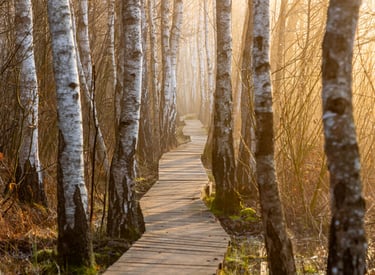
Poleski National Park is a unique wetland area that encompasses vast peat bogs, swamps, and karst lakes, constituting the largest concentration of boreal-type areas in Central Europe. Its symbol is the crane, and the Park is a sanctuary for rare species of aquatic and wetland birds, as well as the endangered European pond turtle. The Park offers tourists picturesque nature trails, often leading along wooden boardwalks, allowing for the admiration of wild, unspoiled nature. It is an ideal place for ornithology enthusiasts, moose lovers, and those seeking active recreation away from the hustle and bustle.
The buffer zones of Poleski National Park can be reached by bicycle via a safe off-road route, which will be slightly longer (50 km) than the car route.
Sobibór Museum
and Memorial Site
Located approximately 25 km from Poleski Wschód™
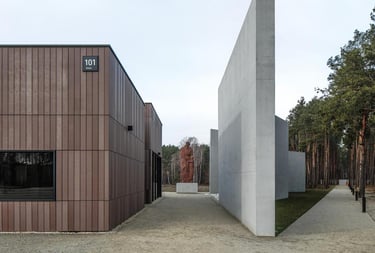
The Museum and Memorial Site in Sobibór commemorates the victims of the German Nazi extermination camp that operated here as part of Aktion Reinhardt. This is a place of deep contemplation and martyrdom, where mainly Jews from Poland and Europe were murdered between 1942 and 1943, including the huge majority of Włodawa Jews, who constituted over 70% of the city's population before the war. The modern educational exhibition presents the history of the camp, while the grounds today serve as a symbolic commemoration of the tragic events. Despite its difficult nature, Sobibór is situated within the Sobibór Landscape Park, offering silence and an opportunity for reflection amidst beautiful nature.
The Museum in Sobibór can be reached mostly via a cycling path safe for children; only the last section leads along a rural asphalt road.
Józef Ignacy Kraszewski Museum
St. Onuphrius Monastery in Jabłeczna
Located approximately 25 km from Poleski Wschód™
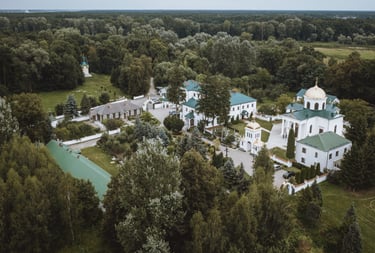
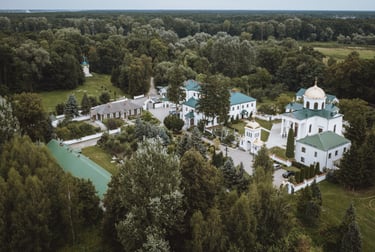
The St. Onuphrius Monastery in Jabłeczna is one of the most important Orthodox centers in Poland, picturesquely situated on the Bug River. It is a male monastery with a rich history dating back to the 15th century, associated with the legend of the miraculous appearance of the icon of St. Onuphrius. The entire monastic complex, including the Orthodox church and residential buildings, constitutes a valuable pearl of sacred architecture and the region's cultural heritage. The Monastery, thanks to its unique location and spiritual atmosphere, is willingly visited by both pilgrims and tourists seeking peace and beautiful views.
The Monastery in Jabłeczna can be reached via a safe cycling path up to Hanna; unfortunately, the section from Hanna to Jabłeczna leads along a narrow provincial road. It may be possible to get there from Poleski Wschód via an off-road route along the Bug River, but we have never done it 🤭.
Bug River
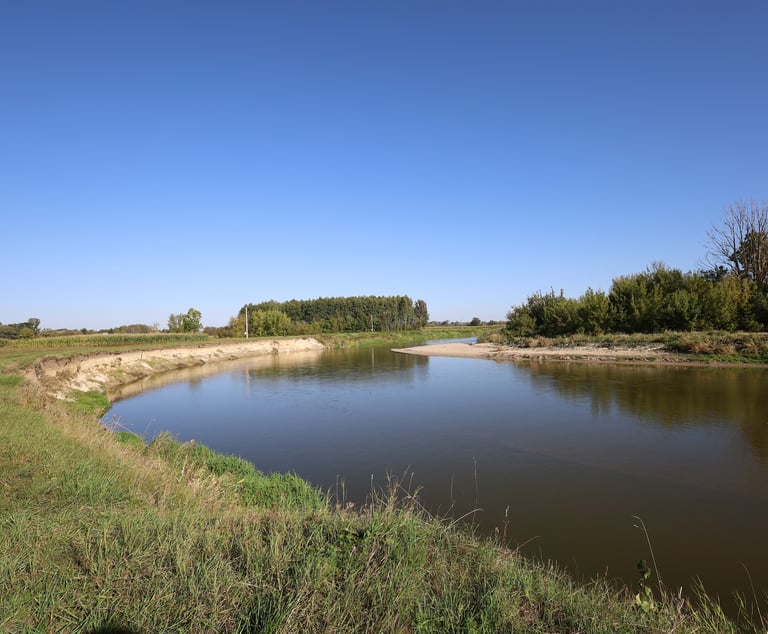
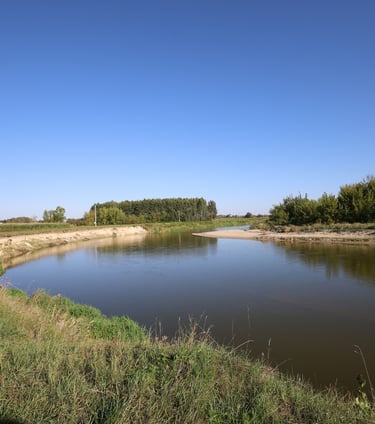
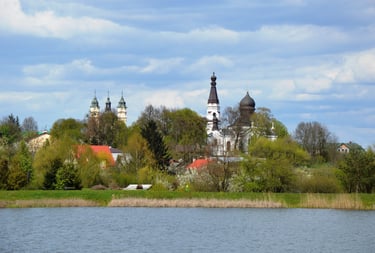
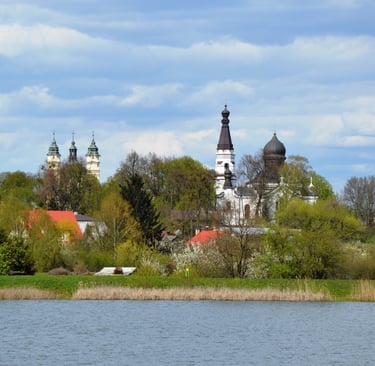
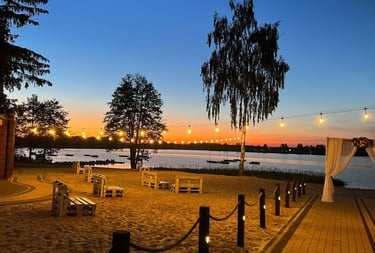
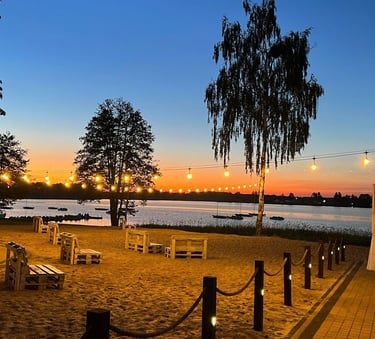
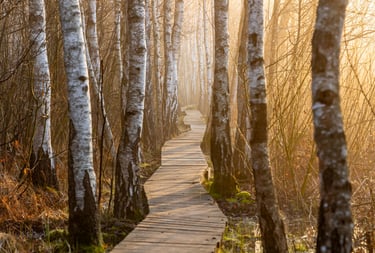
Last, but definitely not least! The greatest attraction of Poleski Wschód™, as well as the Polish Polesie region – the Bug River.
500m from Poleski Wschód™ flows the Bug River, one of the most wild, natural, and unregulated large rivers in Europe. Largely retaining its original, meandering character, it marks Poland's eastern border with Ukraine and Belarus, forming a symbolic, cultural and natural barrier. The Bug has unspoiled banks, which makes it a paradise for fauna and flora associated with aquatic ecosystems. Along its course stretch picturesque riverside meadows, valuable nature reserves, and unique peatlands, including areas covered by the Natura 2000 program. It constitutes a key ecological corridor on a continental scale, enabling the migration of many animal species, especially birds. Kayaking down the Bug is a true journey through time, offering peace and quiet. Historically, its valley has witnessed turbulent events, which adds to its historical and sentimental significance. The river water often has a sandy bottom and is favorable for fishing. The Bug is not just a river – it is a symbol of Polesie, its pristine beauty, and the extraordinary hospitality of its inhabitants. In summary, its wildness, purity, and border character make it the pearl of Polesie, the Lublin region, and all of Poland..
Located 20km from Poleski Wschód™
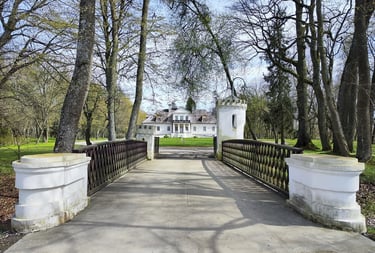
The Józef Ignacy Kraszewski Museum is located in Romanów, in a restored manor house that was the birthplace and childhood home of this outstanding Polish writer, publicist, and historian. The exhibition presents not only the literary output of Kraszewski—the author of over 200 novels—but also family memorabilia, as well as ethnographic and archaeological collections from the Polesie region. The venue, set amidst a beautiful historic park, has an intimate, manor house character, which allows visitors to feel the atmosphere of the era. It is a must-see destination for lovers of literature and 19th-century Polish history.
The Museum in Romanów can be reached mostly by a children-friendly bicycle path; only the final section leads along a rural asphalt road, or alternatively, by an off-road route.
Address
Poleski Wschód
Stawki Street 20
22-200 Stawki
Contact
+48 507 591 947 (tel/WhatsApp)
kontakt@poleskiwschod.pl
A fast electric vehicle charging station (11kW) is available in the Poleski Wschód™